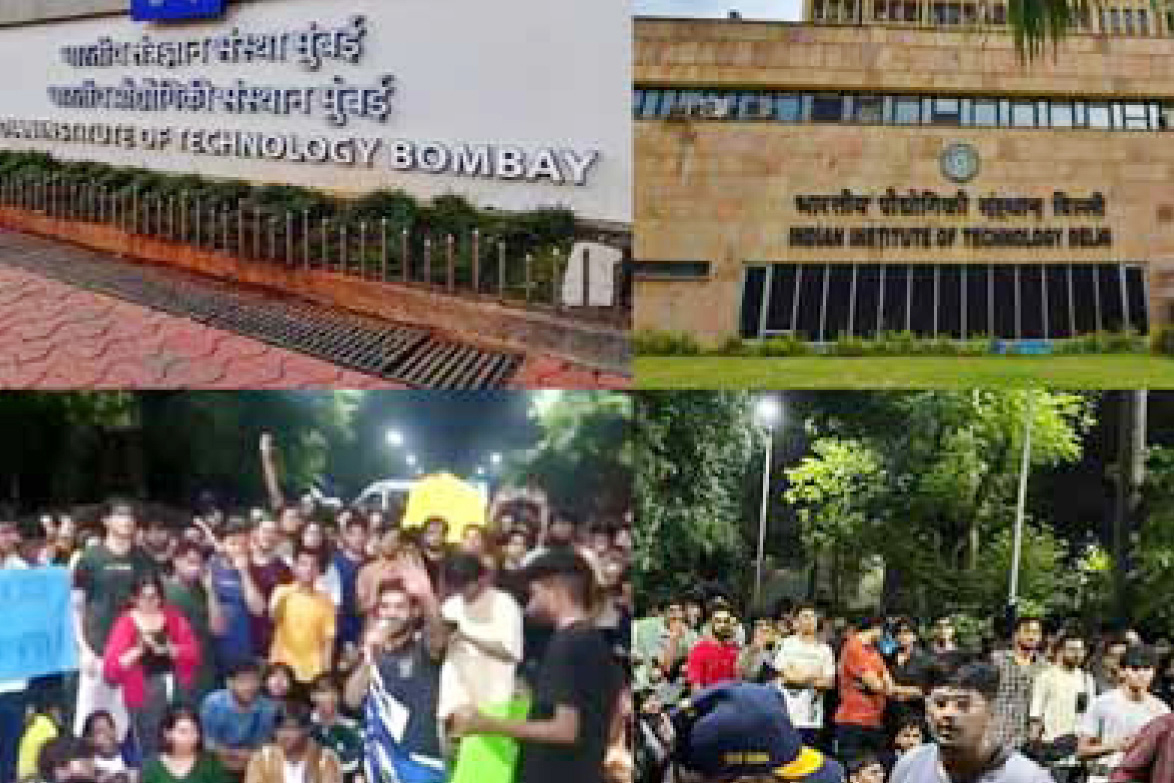
Student protests have erupted across various IITs following recent student deaths by suicide.
Abstract: Student distress is an increasingly recognised concern, poignantly reflected in the rising instances of student suicides across institutions of higher learning in India. Despite institutional mechanisms, support systems, and standard operating procedures, disturbing incidents persist and, in many cases, escalate. Children today often grow up in evolving family structures, where they may have limited opportunities to share, negotiate differences, receive criticism, or confront failure. In such environments, a fragile or skewed sense of self-worth can take root. When these young adults eventually step beyond their familiar ‘comfort zones’, they encounter a world that is far less indulgent—more competitive, demanding, and objectively critical. The transition can expose vulnerabilities for which they may not yet possess the emotional resources or coping mechanisms. Addressing youth stress, therefore, requires us to look beyond isolated incidents and institutional responses, and instead understand the young person within the larger ecosystem of family, society, education, expectations, and lived experience. Only through such a comprehensive lens can we begin to meaningfully understand, prevent, and respond to distress among young people.
The author is Former Senior Professor, University of Delhi; Former Associate Professor, IIT Kharagpur.
Student distress is an increasingly recognised concern, poignantly reflected in the rising instances of student suicides across institutions of higher learning in India. Despite institutional mechanis...
Assam Chief Minister Himanta Biswa Sarma has announced plans to reduce the Kaziranga Eco-Sensitive Zone (ESZ) to one km as opposed to the current 10 km. The state government’s intention has raised con...
Glaw Lake was recently designated as Arunachal Pradesh’s First and India’s 101st Ramsar Site. It is located within the Kamlang Tiger Reserve and Wildlife Sanctuary. It hosts diverse flora and fauna sp...
Maritime chokepoints are vital points along shipping routes that facilitate the passage of substantial trade volumes. These chokepoints control the global essential supplies such as oil, gas, fertiliz...