Volcanoes around the world - what is likely to become active
India is set to embark on a new chapter in its Polar exploration journey with the construction of Maitri II. The Indian government plans to establish a new research station near the existing Maitri ba...
The Deep Ocean Mission (DOM), approved by the Government of India in 2021 under the Ministry of Earth Sciences (MoES), represents a strategic step in realizing Sustainable Development Goal 14 (SDG 14:...
China recently announced restrictions on the export of seven rare earth elements (REEs), soon after US President Donald Trump decided to impose tariffs. As the world's dominant supplier—responsible fo...
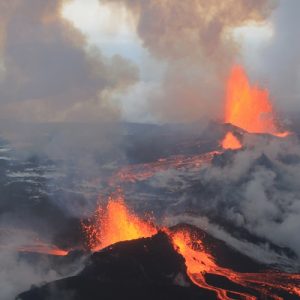
<p>A volcano is the emission of lava, ash and gases from deep under the earth’s surface through a crack on the surface of the earth. According to the Plate Tectonic Theory, the earth’s lithosphere (wh...
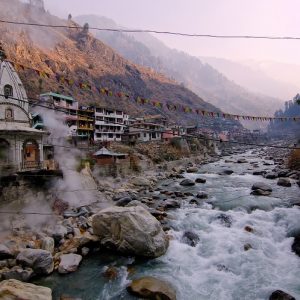
<p>India is a country with vast diversity in terms of geographical landforms and features. Our country is endowed with mineral wealth as also with hot and cold water springs. Hot Water Springs In Indi...
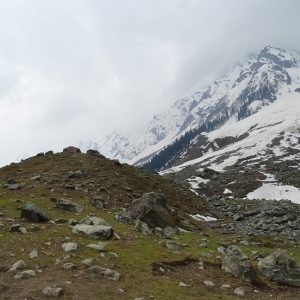
<p>Glaciers are represented by the flowing movement of a thick mass of ice and form as a result of the compaction or recrystallization of snow. Glaciers occur in areas whose climate favours the season...
<p>India is culturally very rich and diverse and has a long history. This richness and history is visible in historical architectures and monuments. India has a vast number of heritage sites that show...
<p>A volcano is the emission of lava, ash and gases from deep under the earth’s surface through a crack on the surface of the earth. According to the Plate Tectonic Theory, the earth’s lithosphere (which includes the crust and upper mantle) is made of tectonic plates.</p>
<p>India is a country with vast diversity in terms of geographical landforms and features. Our country is endowed with mineral wealth as also with hot and cold water springs. Hot Water Springs In India Thermal springs or hot water springs are formed due to geothermally heated water emerging onto the earth’s surface through cracks.</p>
<p>Glaciers are represented by the flowing movement of a thick mass of ice and form as a result of the compaction or recrystallization of snow. Glaciers occur in areas whose climate favours the seasonal accumulation of snow in greater volumes than seasonal ablation.</p>