STAFF REPORTER
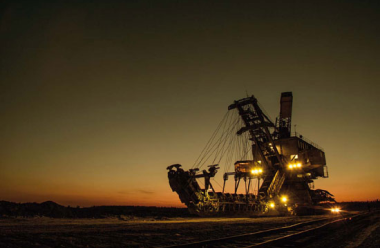
In conversation with Dr. G. A. Ramadass, Group Head, Scientist-G, Deep Sea Technologies Group, National Institute of Ocean Technology (NIOT). In an exclusive interview, Dr. Ramadass talks about India’s plans to mine polymetallic nodules in the Indian Ocean. Major nations are looking to the oceans for mineral and fuel reserves as reserves on land deplete fast.
Read more
<p>Since the late 1970s, the term ‘empowerment’ has been liberally applied by academics and aid workers in the English-speaking world, including in social services, social psychology, public health, adult literacy and community development.</p>
Read more
<p>The Department-related Parliamentary Standing Committee on Science & Technology, Environment & Forests, under the Chairpersonship of Renuka Chowdhury, Member of Parliament presented its Two Hundred and Ninety-third Report on ‘Forest Fires and its Effect on Environment, Forests, Bio-diversity and Wildlife and remedial/preventive measures’ to both the Houses of Parliament on December 16, 2016. Uncontrollable and […]</p>
Read more
In Conversation with Dr. S C Shenoi, Head, Indian National Centre for Ocean Information Services (INCOIS) With 28 years of research experience ocean sciences, Dr. Shenoi has revolutionized India’s traditional views of ocean-atmosphere coupling, apart from making an enormous contribution towards the livelihood enhancement of fisherpeople by presenting to them information related to potential fishing.
Read more
<p>Cyclone Vardah that crossed Chennai coast on December 12, 2016 has affected the city’s functionality. The storm, the most intense cyclone to have hit the Tamil Nadu capital in two decades has left six people dead according to Times of India, snapped communication lines, flattened homes, and threw into disarry rail, road and air traffic […]</p>
Read more
<p>Update – December 12, 2016 The very severe cyclonic storm (VSCS)- VARDAH over westcentral and adjoining southwest Bay of Bengal moved further nearly westwards during past 6 AM with a speed of 13 kmph and lay centred at 5:30 AM of today, the December 12, 2016 over westcentral and adjoining southwest Bay of Bengal near […]</p>
Read more
Despite many governmental initiatives, malnutrition in India remains a major health challenge. There is a marked deficit of fruits in the diet of most Indians, consuming much lower than what is recommended by the World Health Organisation (WHO). One of the reasons behind this is the high price of fruits and thus its inequitable access. As we prepare ourselves to live in a world marred by COVID-19 and a shrinking Indian economy, we must think of new ideas to manage access to food, especially micro-nutrient rich fruits. This paper explores the possibility of planting endemic fruit trees in public spaces like roadsides and parks, that can help in increasing the consumption of fruits amongst the poor. It also attempts to analyse whether this can serve as a long-term solution to bridge the gap between fruit production and consumption in India.
Read more

Nandini Sundar, a professor of sociology at the Delhi School of Economics, is an acclaimed researcher and a well accepted authority on tribal communities of India. In a conversation with Prof Sachidnanad Sinha, Guest Editor, G’nY, she discusses the various issues facing the scheduled tribe population in the remote regions of India.
Read more